Skip to content
Gloucester County Amateur Radio Club

Gloucester County Amateur Radio Club

Skunkworks Advanced Project Team

Menu
  • Home
  • Clubhouse
    • The GCARC Clubhouse
    • Grounding Project
    • Networking Infrastructure
    • Work and Test Bench
    • Clubhouse Satellite Station
      • Satellite Rotator Controller
    • SatNOGS Ground Station
    • Earth-Moon-Earth (EME)
    • Discovery Satellite Snooping Dish
    • GOES-19 Satellite Reception
    • Clubhouse Remote nRSP-ST Resource
    • Skunkworks GitHub Resource
    • ISS SSTV
    • NOAA Weather Fax
    • ADS-B
  • Technical Activities and Resources
    • 3D Printed Projects
    • DMR
      • Using DM-1701 CPS Program
      • Open GD77 on Baofeng DM1701
    • Software-Defined Radios
      • Installing an RTL-SDR on a Windows PC
      • Software Defined Radio Demystified
    • Meshtastic
      • Getting Started with Meshtastic on 915 MHz
      • How to Join the GCARC Channel on Your Meshtastic Device Using a QR Code
      • Window-Mounted 915 MHz Meshtastic Yagi Antenna Project
    • Exploring Ham Radio Digital Modes: Packet Radio and WSJT-X
      • Packet Radio (AX.25) in Amateur Digital Communications
      • Exploring WSJT Digital Modes
    • BTECH UV-PRO Radio
      • Satellite Mode for the UV-PRO
    • TIDRADIO H3 Resources
      • TIDRADIO TD-H3 Transceiver: Comprehensive Briefing
      • Overview of Stock Firmware Menu System
      • Comparison of Stock TIDRADIO Firmware vs. nicFW V2 Firmware
    • Balloon Project
      • Balloon Launch – 2025-03-17
    • Tech Saturday Presentations
  • STEM Club and Camp
  • Public Service
    • Winlink VHF and HF Gateways
    • APRS Weather Reporting Station
    • AREDN Development
  • The Foundation
  • Blog
  • Contact

NOAA Weather Fax

The NOAA LEO satellites ceased operation in August 2025. Below is a description of the project that was in place while those satellites were still in operation.

The NOAA low-earth orbiting (LEO) weather satellites continually transmit an APT-based signal of the ground below showing cloud cover, precipitation and other weather features. Differing from the GOES satellites these LEO satellites show a much smaller footprint of the area over which they’re flying, and the quality of their transmission is dependent on their distance from the receiving station. NOAA satellites broadcast in the 137mhz frequency range but can be received with amateur’s 2 meter antennas as is done at the GCARC clubhouse station.
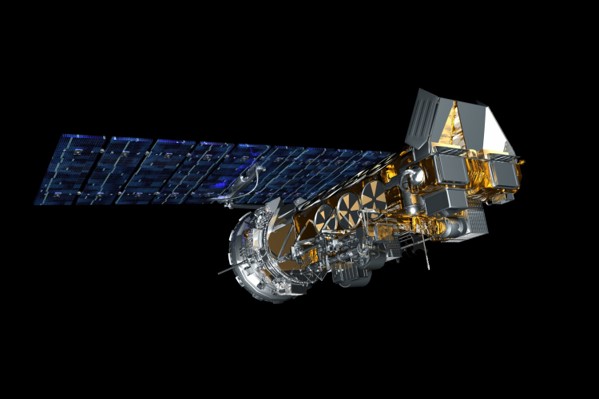
NOAA 18

The receiving program runs on a Raspberry Pi and uses an RTL-sdr receiver. The software runs predictions of each upcoming orbit of each satellite being followed and will schedule a receiving session for when the satellite pass starts. The process uses the RTL-FM program to receive the analog signal and record it to a .wav file that is then processed by the WxToImg program to create the images.

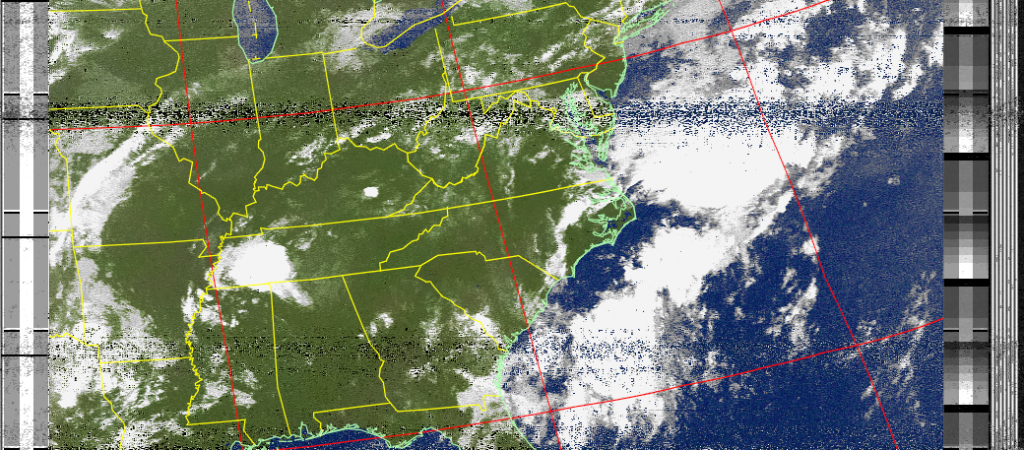
Below is a typical image from NOAA 18. Note that it’s centered over New Jersey meaning that the satellite was traveling almost overhead when sending this image, which is why it’s so clear.
Archives

  • July 2024
  • November 2023
  • April 2023
  • March 2023
  • June 2022
  • July 2021
  • April 2021
  • March 2021
  • September 2020
  • September 2019
  • August 2019
  • July 2019
  • June 2019
  • December 2018
  • November 2018
  • October 2018
  • September 2018
  • August 2018
  • July 2018
  • June 2018
  • May 2018
  • April 2018

Categories

  • Balloon
  • Clubhouse Infrastructure
  • Digital Position Tracking
  • Raspberry Pi
  • Satellite Images
  • Satellite Operations
  • Satellite Telemetry
  • SDR
  • Uncategorized

Meta

  • Log in
  • Entries feed
  • Comments feed
  • WordPress.org
  • Home
  • Clubhouse
    • The GCARC Clubhouse
    • Grounding Project
    • Networking Infrastructure
    • Work and Test Bench
    • Clubhouse Satellite Station
      • Satellite Rotator Controller
    • SatNOGS Ground Station
    • Earth-Moon-Earth (EME)
    • Discovery Satellite Snooping Dish
    • GOES-19 Satellite Reception
    • Clubhouse Remote nRSP-ST Resource
    • Skunkworks GitHub Resource
    • ISS SSTV
    • NOAA Weather Fax
    • ADS-B
  • Technical Activities and Resources
    • 3D Printed Projects
    • DMR
      • Using DM-1701 CPS Program
      • Open GD77 on Baofeng DM1701
    • Software-Defined Radios
      • Installing an RTL-SDR on a Windows PC
      • Software Defined Radio Demystified
    • Meshtastic
      • Getting Started with Meshtastic on 915 MHz
      • How to Join the GCARC Channel on Your Meshtastic Device Using a QR Code
      • Window-Mounted 915 MHz Meshtastic Yagi Antenna Project
    • Exploring Ham Radio Digital Modes: Packet Radio and WSJT-X
      • Packet Radio (AX.25) in Amateur Digital Communications
      • Exploring WSJT Digital Modes
    • BTECH UV-PRO Radio
      • Satellite Mode for the UV-PRO
    • TIDRADIO H3 Resources
      • TIDRADIO TD-H3 Transceiver: Comprehensive Briefing
      • Overview of Stock Firmware Menu System
      • Comparison of Stock TIDRADIO Firmware vs. nicFW V2 Firmware
    • Balloon Project
      • Balloon Launch – 2025-03-17
    • Tech Saturday Presentations
  • STEM Club and Camp
  • Public Service
    • Winlink VHF and HF Gateways
    • APRS Weather Reporting Station
    • AREDN Development
  • The Foundation
  • Blog
  • Contact

Gloucester County Amateur Radio Club 2026 . Powered by WordPress